
You start a trip, set your GPS, a call comes in, your battery is at 18%, and your car doesn't have Bluetooth. That's exactly where the "car charger with FM transmitter" plays a dual role - it keeps your phone charged and brings its sound to the radio, without you having to change your sound system or mess with AUX cables that get lost under the seat.
The great thing is that we're not talking about a "gadget" just for old cars. Even in more modern models, a good FM transmitter can be a lifesaver when you need a second charging port, hands-free calls, or simply want to play music from Spotify, YouTube, or radio apps in a way that doesn't make you sweat from interference.
What exactly is a car charger with an FM transmitter?
Think of it as a small hub that plugs into the cigarette lighter socket (12V/24V). On one side, it has charging ports (usually USB-A and USB-C). On the other, it "broadcasts" on a free FM frequency, so your car radio picks it up like a station. Your phone connects via Bluetooth (or in some cases via USB/microSD card), the sound is converted into an FM signal, and you hear it through your speakers.The result depends on two things: the quality of the device and how "clean" a frequency you can find in the area you're driving in. In big cities with a crowded band, it requires a bit of searching. On national highways, it's usually easier.
When is it most (and least) worth it?
If your car doesn't have Bluetooth or its Bluetooth is unstable, it's one of the quickest upgrades. It's also worth it when you're on the road for many hours and want both charging and music simultaneously, or when different phones (driver, passengers) frequently get in the car and you want something that connects in seconds.On the other hand, if you already have good Bluetooth in your car and all you want is charging, a simple car charger might suffice. And if you're very particular about sound, be aware of the trade-off: FM always has a "ceiling" in quality compared to a pure digital signal. For everyday use, however, especially with the correct frequency, it's perfectly fine.
What to look for before buying
You don't need to become a technician. You just need to identify 4-5 elements that make a huge difference in the experience.Charging: how many Watts and what ports
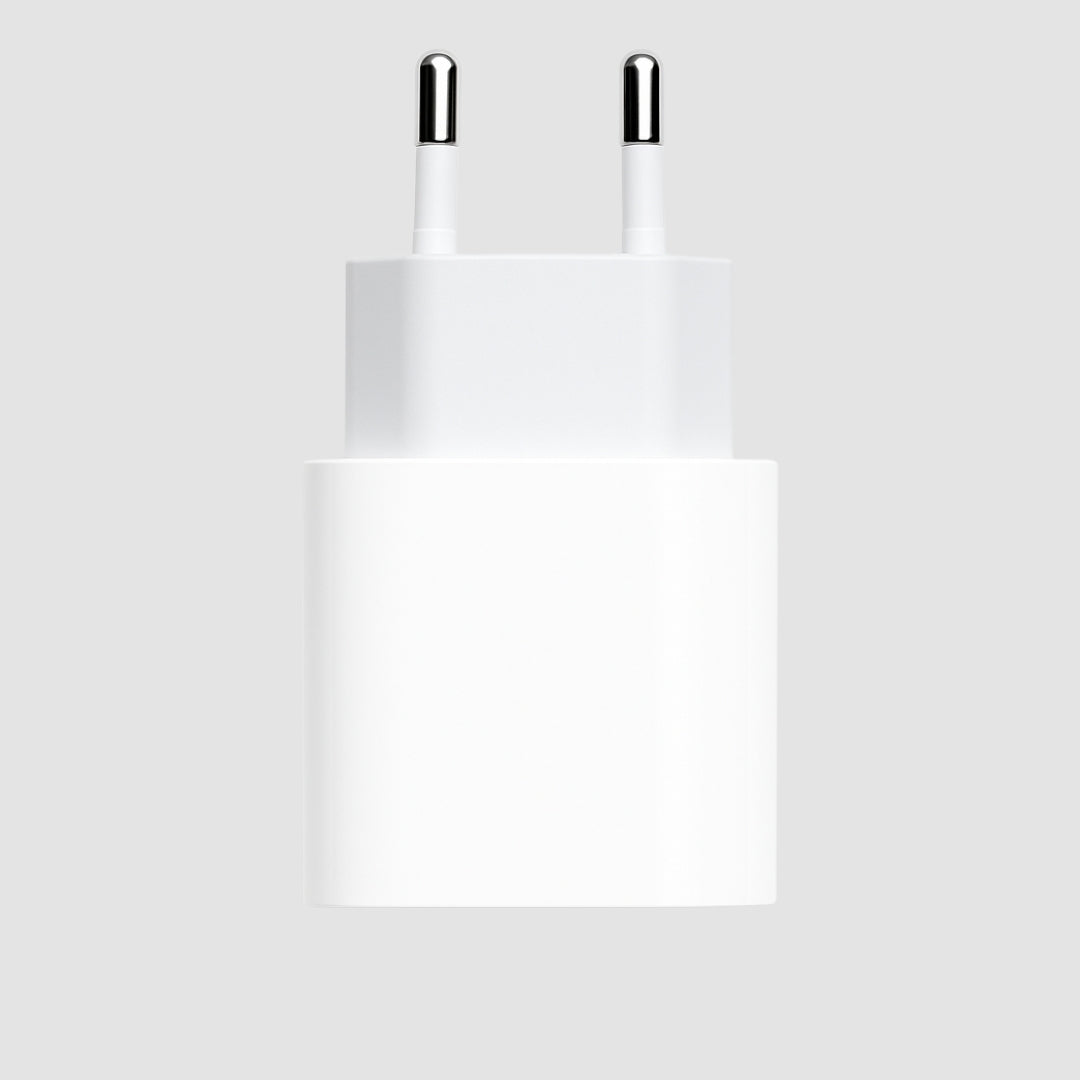
If you have an iPhone with MagSafe or newer Samsung, you most likely want fast charging. Look for USB-C Power Delivery (PD) for more modern phones and USB-A with Quick Charge (QC) for broad compatibility.For one phone, an 18W-20W output is fair. If you want to charge a second device (second phone, smartwatch, headphones), practically a model with a total power of 30W-45W is convenient. This also shows the quality - some cheap ones claim big numbers, but in practice, they distribute few Watts when charging two ports simultaneously.
Sound: stable signal and clear frequency
The main reason some people are disappointed with FM transmitters is the wrong frequency. You want an "empty" frequency, as far as possible from strong stations. If your device has a scanning/empty frequency finding function, it helps a lot. Otherwise, you do the classic: tune your radio to the low or high end of the band, find a spot without broadcasting, and set the transmitter there too.Bluetooth stability also matters. If the sound cuts out or has a delay, usually it's not the phone's fault - it's the transmitter.
Calls: microphone that can hear you, not get muffled
Hands-free means safety. But to be useful, the microphone needs to pick up your voice clearly and reduce road noise as much as possible. If you make many calls, prefer a model that emphasizes call clarity and has buttons for answering/ending on the device itself.Here there's a fair "it depends": in a small city car, even a simple microphone might be okay. In an SUV or an older car with more cabin noise, you'll appreciate better reception.
Power supply and compatibility: 12V and 24V
If you have a regular car, you're at 12V. If you drive a commercial vehicle/truck, you might be at 24V. A good car charger with an FM transmitter often supports 12V/24V, so you don't have to think about it.Ergonomics: not to obstruct the dashboard
A small detail that becomes huge in everyday life. If the cigarette lighter socket is low or next to cup holders, a "bulky" model will bother you. If you often drive at night, a discreet LED is okay - a very strong light is tiring.How to set it up correctly (without getting annoyed)
The quick routine is simple.First, plug the device into the lighter and turn on the radio. Then find a frequency that has no station - you'll know because you only hear "white" noise. Set the same frequency on the transmitter. Then pair Bluetooth from your phone and press play on a song.
If you hear interference, don't take it personally. Try another frequency and, if you can, go 0.2 or 0.4 MHz away from strong stations. In some areas, you'll have 2-3 frequencies that work perfectly. Keep a "favorite" and an alternative for when you travel.
Small details that make a difference in practice
There are models that also play music from a USB stick or microSD. This is useful if you want to leave a playlist in the car without touching your phone or if you don't want to consume data. It's not a must, but for some drivers, it's very convenient.Also, pay attention to volume management. The best practice is to have your phone at a relatively high volume (not max) and adjust mainly from the radio. This reduces noise and keeps the signal cleaner.
For charging, use a cable that "supports" the power. A worn or very thin cable can reduce charging speed, no matter how good the charger is.
What to expect from sound quality - realistically
If the goal is to clearly hear music, navigation directions, and calls, the FM transmitter does its job. But if you compare it to USB audio or high-quality factory Bluetooth, you will hear a difference - especially with very strong bass or at high volume.The good thing is that for 90% of everyday life, what matters is that it doesn't cut out, doesn't "rattle," and you don't have to adjust settings every 5 minutes. That's where more reliable devices win, not necessarily those that promise dozens of features.
How to buy it smart (and economically)
If you're looking for something that won't let you down on the road, prioritize fast charging (PD/QC), stable Bluetooth connection, and clear control buttons. Then look at extras like USB/microSD.And of course, since we're talking about a product you want "yesterday," the shopping experience matters. At Phonebazaar.gr you'll find options for car chargers and FM transmitters with clear purchasing logic - fast shipping, easy returns, and frequent offers to get a good price without a second thought.