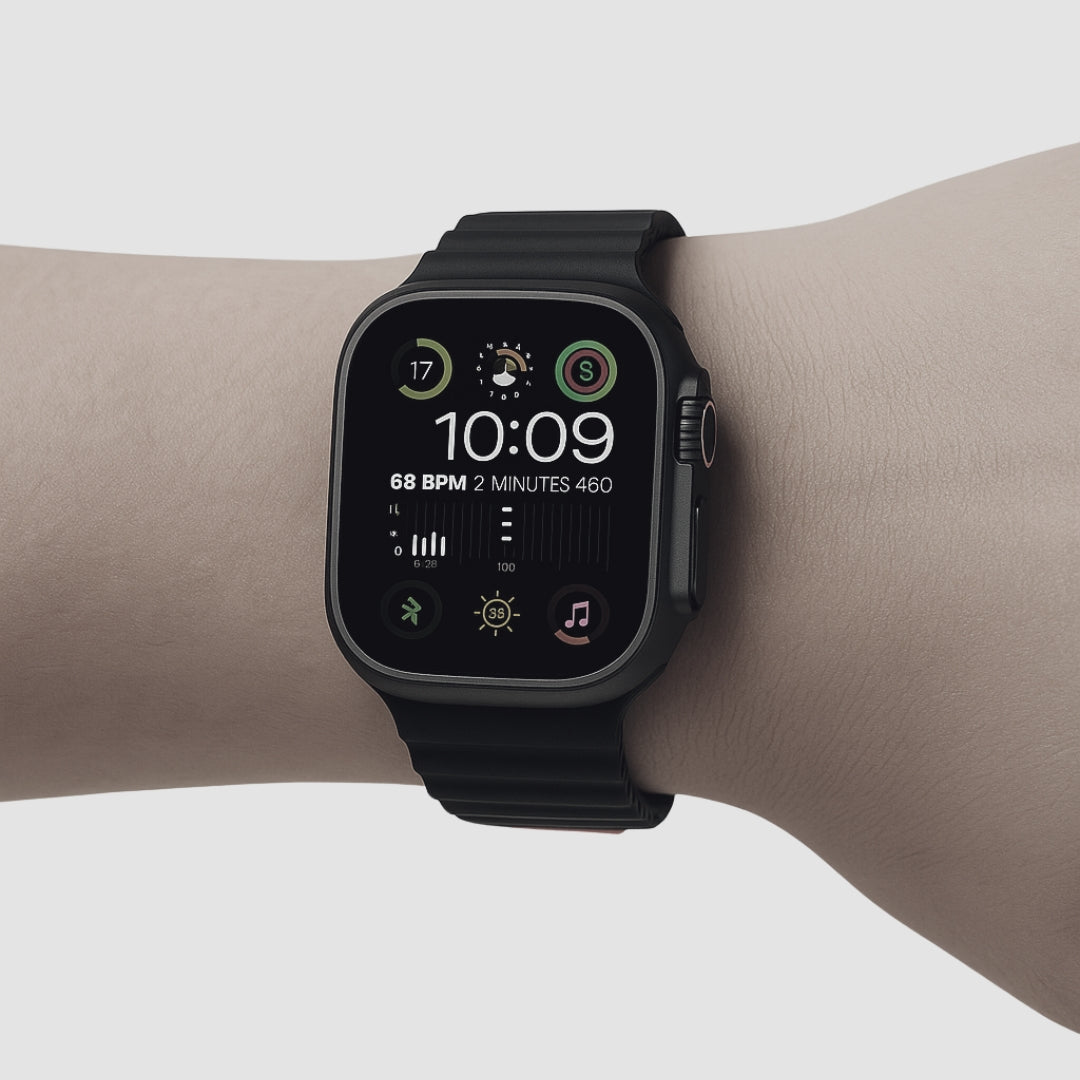

You wear your Apple Watch everywhere. At the gym, at work, commuting, at the supermarket – and somewhere in between, it will bump against doors, desks, walls, weights, and even… keys in your jacket pocket. Its screen is the part that takes the most abuse because it's always exposed. And here comes the classic dilemma: does it need a screen protector, or is that overkill?
Apple Watch Screen Protector - When You Really Need It
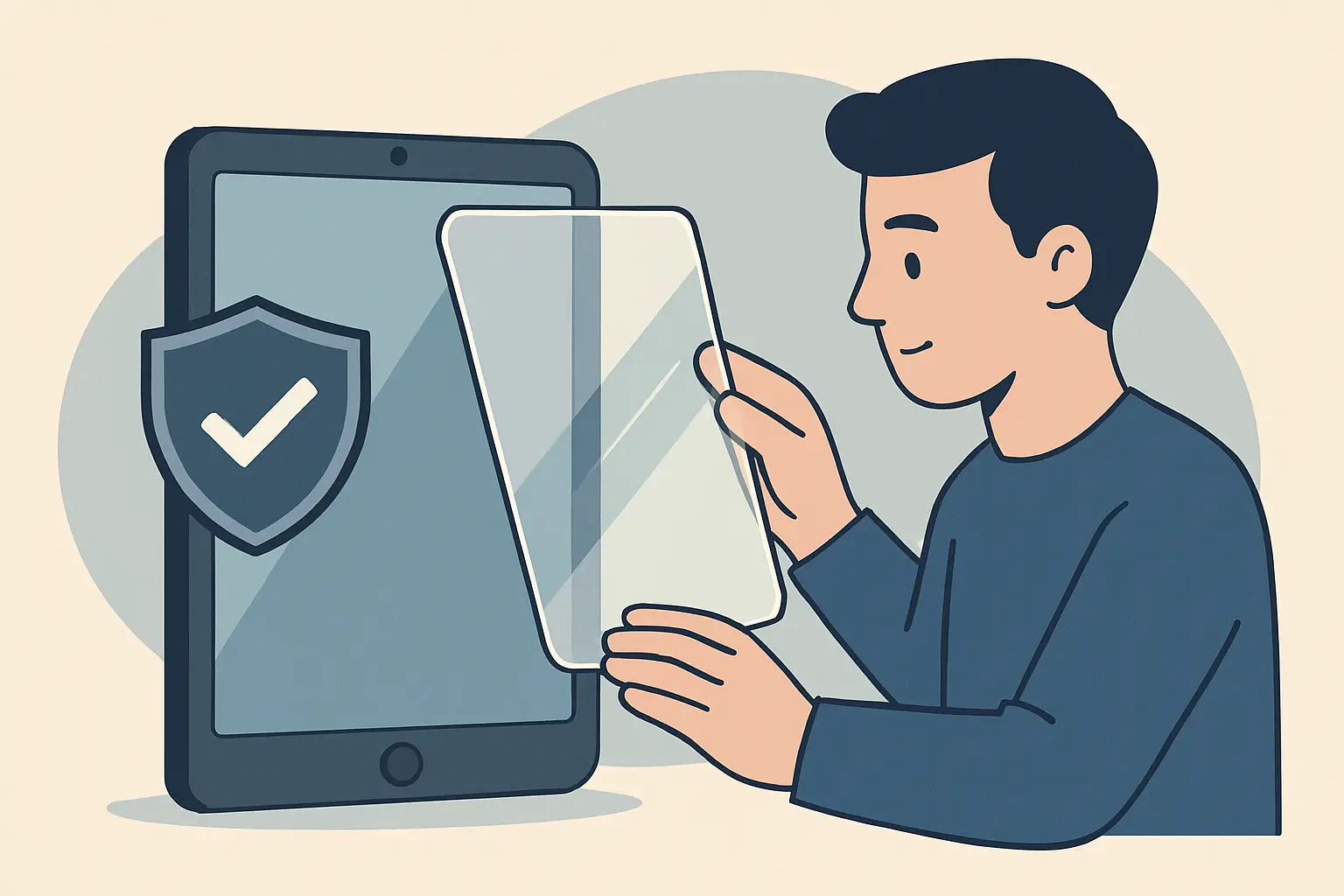
If your watch is new, the answer leans towards "yes," not because "it will definitely break," but because micro-scratches appear insidiously. A fine scratch doesn't bother you on day one. It bothers you when it starts to show in the light, when you clean the screen and see it with every swipe.An Apple Watch screen protector makes sense especially if you use it intensely daily: frequent workouts, working in an environment with tools, commuting by public transport, or if you simply have a "clumsy" lifestyle. If, on the other hand, you wear it mainly in mild conditions and are very careful, you might postpone it - but usually, you end up putting it on after the first damage has occurred.
There's also the resale aspect. An Apple Watch with a clean screen retains its value. One with visible marks immediately loses value, no matter how perfect it is functionally.
What types of protection exist and which one suits you
The choice isn't just "a protector and that's it." The on-hand experience changes depending on the material, thickness, and coverage.Tempered glass - the choice for a "naked screen" feel
Tempered glass is what most people prefer because it maintains the premium feel: smooth touch, clear image, good resistance to minor impacts and scratches. It's usually the most "honest" solution for everyday use, especially if you want to forget there's anything on the screen.The trade-off is that application requires a little care. If it's applied crookedly or with dust, you'll see it. Also, with very strong impacts, the protector itself may crack - which is the point (to sacrifice itself), but it means you'll have to change it at some point.
Film (film/TPU) - thin, discreet, with an emphasis on scratches
If you don't want the screen to "thicken" at all, or if you frequently put on/take off a case-protective frame, a good film is more flexible. It perfectly covers scratches, doesn't break, and in many cases "hugs" curves better.The trade-off here is the touch sensation. With many films, you'll feel a slightly different glide or a "softer" surface. It may also collect fingerprints more easily if it doesn't have the right coating.
Full cover solutions - when you want to cover the curve too
Some protectors are designed to go closer to the screen's curve or cover more of it. This is a good choice if you're bothered by seeing the bare perimeter.Here, however, compatibility with cases/bumpers plays a big role. The more "full cover" it is, the easier it will lift at the edge if pressed by a protective frame.
Compatibility: the number one mistake users make
Apple Watch doesn't mean one model. It means case size (41mm, 45mm, etc.), generation (Series 4/5/6/7/8/9, SE, Ultra), and different curves/dimensions. A protector that says "for Apple Watch" is not enough. You need an exact match.Even if the size appears the same, the tolerance in cutting or "fit" can differ. So before buying, check the exact size indicated on the back of the case or in the Watch settings.
Protector and case together - is it possible?
It is possible, but it requires the right choice. If you wear a bumper or a full Apple Watch case (those that cover the perimeter as well), there's a chance it might lift the edges of the protector, especially with tempered glass.The most "sure" recipe is either:
- film + bumper, so there's no hard edge that gets pressed
- tempered glass that is designed to be case-friendly, with slightly less coverage so it doesn't come into contact with the frame
How to tell if a protector is good
No technical analysis is needed. In practice, three things matter: clarity, feel, and fit.Clarity means it doesn't "blur" colors and doesn't create strong reflections. Feel means your finger doesn't stick and you don't feel it "dragging" when you swipe. Fit means it sits correctly without bubbles at the edges and without hindering use (e.g., making gestures in the corners difficult).
If you see that as soon as you put it on, it has permanent small bubbles that don't go away or it lifts at the corners within the first day, it's usually not "your fault." It's a bad product application or incompatibility.
Home application without stress
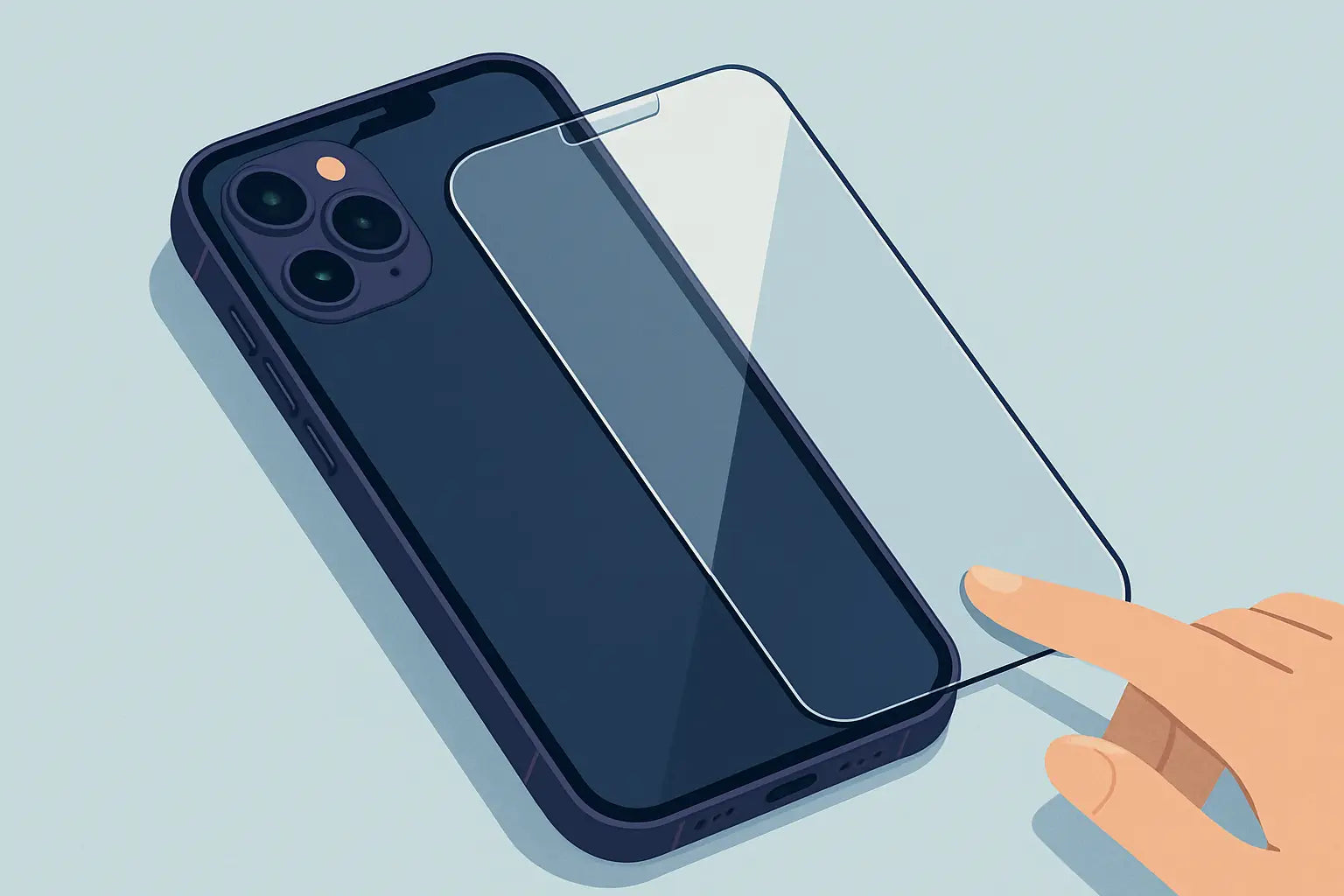
Installation is a 5-minute job, as long as you do it right.Clean the screen very well and wait for it to dry completely. Most failures come from an almost invisible speck of dust sitting in the center. If you can, do it in an area with not much "air" (not next to an open window, not over clothes/towels that shed lint).
Align before touching. Hold the protector over the screen, find the right spot, and then lower it steadily. If it's tempered glass, press from the center outwards. If it's a film, work slowly to avoid "trapping" air.
If something goes wrong, don't peel it off ten times. With each lift, you increase the chance of dust getting in. If you see it needs correction, lift it only as much as needed.
Privacy or clear? Does it make sense for Apple Watch?
For phones, privacy tempered glass is a huge deal. For Apple Watch, it's more "it depends." If you work in an environment where your notifications are easily visible (e.g., in an office, at a cash register, commuting), a privacy protector might give you peace of mind. On the other hand, the screen is small, and you often look at it at an angle, especially when working out or cycling. There, privacy might make things difficult for you.For most users, clear is more comfortable and more "invisible." Choose privacy if privacy is a real need, not just "I've heard it's better."
How often does it need changing?
There is no expiration date. If the protector has scratches that bother you, if it has cracked, if it has lifted edges, or if it has lost its clarity, you change it.If you do a lot of activities and the Watch gets bumped, it's normal to change it within months. If you are a mild user, it can last much longer. The point is to protect without annoying you.
How to choose it quickly, without overthinking it
If you want a simple decision: for everyday life, tempered glass. For use with a bumper/case or for a more "flex" application, film. If the issue of notifications in public is a concern, consider privacy, otherwise stick to clear.And always, always check the exact size of your Apple Watch. That's what separates an easy purchase from "I bought it and it doesn't fit."
If you want to find it quickly by model and size and move with prices that make sense, a visit to Phonebazaar.gr saves you from wrong choices - and if speed matters to you, the 24/7 pick-up options also help.
Keep it simple: the Apple Watch is a tool you wear to use, not to protect. The right protector lets you live normally and look at your screen without second thoughts.